The Nail Test: Why this $54 billion innovation is terrifying Western auto executives
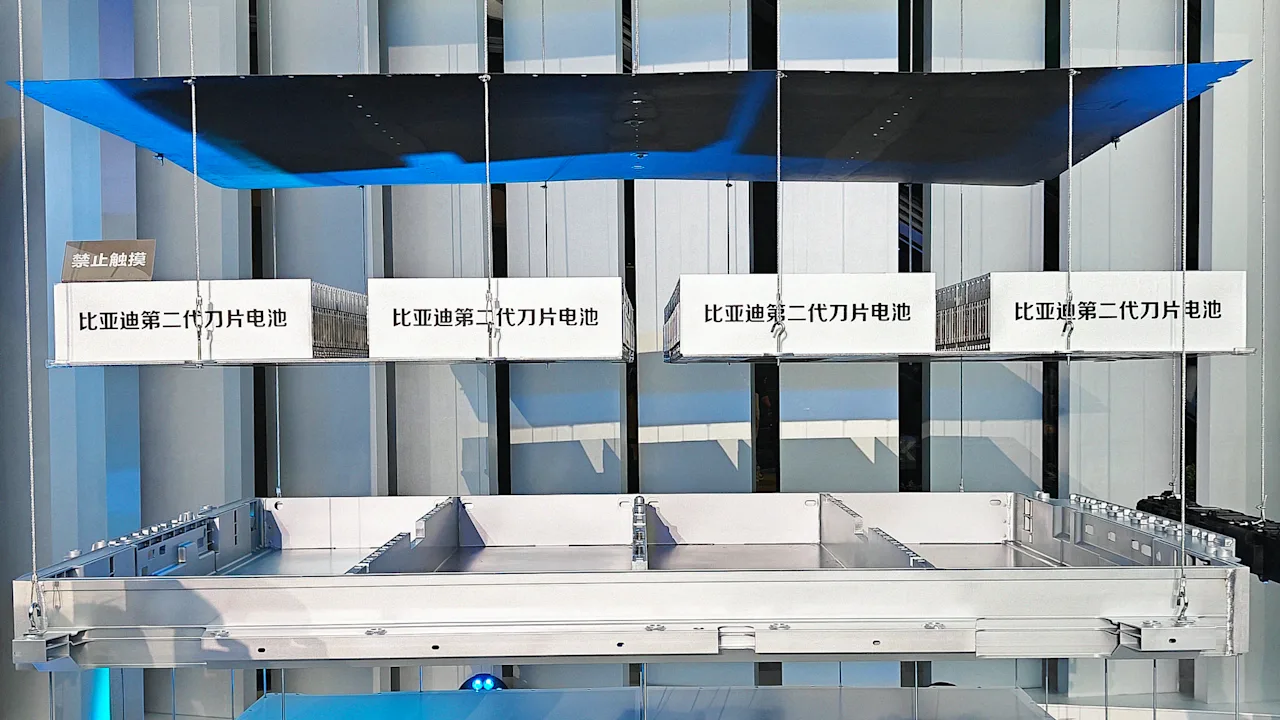
The nail is six inches long. Sharpened to a surgical point. Mounted on a hydraulic press behind plate glass. The press drops slowly enough that you can count your own heartbeat between the moment it touches the battery cell and the moment it punctures the casing. I am standing in BYD’s visitor center in Shenzhen, February 2026, shoulder to shoulder with executives from one of Europe’s largest industrial conglomerates. Nobody speaks. Two batteries sit side by side. The first is a standard ternary nickel-cobalt-manganese cell, the kind of chemistry that once powered most of the world’s electric vehicles. The nail breaks the surface. Half a second passes. Then a guttural whoomp hits the air, and the cell detonates into thermal runaway. Flames lick upward. The thermal camera overhead floods white: surface temperature past 500°C. Black smoke rolls against the glass. The executive next to me steps back and touches his collarbone. That kind of cell had been mounted beneath the passenger seat of a car. In 2012, a speeding Nissan GT-R slammed into a BYD e6 taxi in Shenzhen. The battery ruptured. Fire consumed the cabin. Three passengers died. The public backlash was severe. BYD’s stock dropped. YouTube | Nail Test Wang Chuanfu, BYD’s CEO, barely slept for weeks. Three passengers, all in their twenties. His chemistry. His cell. His company’s name on the casing. He had not built it to kill anyone, but it had. He pulled his engineers together with one question: What is the mechanism by which this cell fails, and how do we make that physically impossible? That question would consume eight years of R&D. A lab burned during the process. The team lost equipment, prototypes, months of iteration. What they did not lose was the data. They rebuilt. They ran the test again. And again. Hundreds of times. Each failed cell was, as one engineer put it, “a treasure for the research staff”: a lesson in physics waiting to be read. The technician resets the press. The second cell is longer,
💬 0 Crumbs
Sign in and join the Nook to post a Crumb.